October 2026

Uncategorized

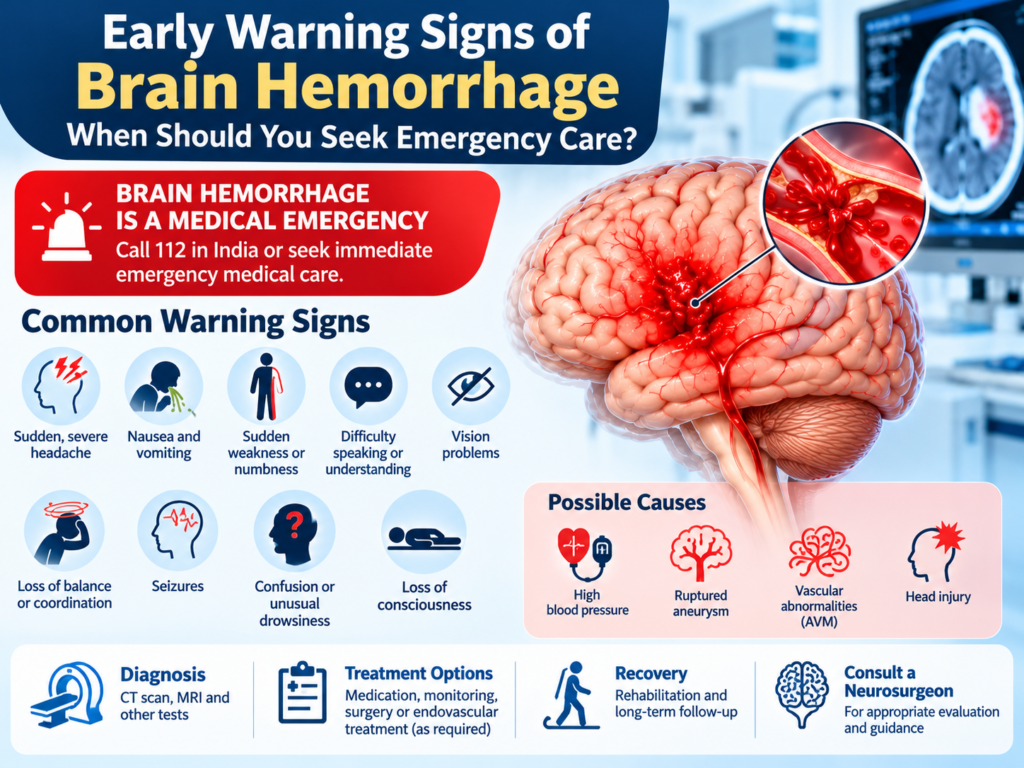
Early Warning Signs of Brain Hemorrhage: When Should You Seek Emergency Care?

A brain hemorrhage occurs when a blood vessel bleeds in or around the brain. The bleeding can damage brain tissue, increase pressure inside the skull, and become life-threatening. Symptoms may begin suddenly, and a person’s condition can worsen quickly. Recognising the warning signs and obtaining emergency medical care can make a critical difference. Some people experience a sudden, extremely severe headache. Others develop weakness on one side of the body, difficulty speaking, vomiting, seizures, confusion, or loss of consciousness. Not everyone experiences the same symptoms, and it is not possible to identify the type of brain bleeding from symptoms alone. Understanding Brain Hemorrhage Treatment in Bhopal starts with knowing that emergency assessment, brain imaging, and an accurate diagnosis guide the next steps. Treatment may involve monitoring, medical management, surgery, or an endovascular procedure, depending on the cause and severity. Not every case requires an operation. If you suspect a brain hemorrhage, call 112 in India or seek immediate emergency medical care. Do not wait for symptoms to disappear or for a routine appointment. What Is a Brain Hemorrhage? A brain hemorrhage means bleeding inside the skull. The blood may collect within brain tissue or in the spaces between the brain and its surrounding protective layers. The location and amount of bleeding influence the symptoms and potential complications. Intracerebral hemorrhage An intracerebral hemorrhage occurs when blood leaks directly into brain tissue. High blood pressure is an important risk factor, although other medical conditions and vascular abnormalities can also contribute. Bleeding may damage nearby brain cells and cause swelling. Depending on the affected area, symptoms can include weakness, speech difficulties, confusion, severe headache, or reduced consciousness. Subarachnoid hemorrhage A subarachnoid hemorrhage occurs when blood enters the space surrounding the brain. One possible cause is a ruptured brain aneurysm, which is a weakened area of an artery wall. A sudden, extremely severe headache is a major warning sign. Vomiting, neck stiffness, sensitivity to light, seizures, or collapse may also occur. Immediate emergency assessment is essential. Other types of bleeding inside the skull Subdural and epidural bleeding occur in different spaces around the brain and are often associated with head injuries. They can cause pressure on the brain and may require urgent treatment. The phrase Brain Hemorrhage Treatment in Bhopal refers to care that must be tailored to the specific diagnosis. The treatment for a traumatic bleed may differ from the approach used for bleeding caused by a ruptured aneurysm. Early Warning Signs of Brain Hemorrhage Symptoms may develop suddenly and sometimes worsen over minutes or hours. A person does not need to experience every symptom before seeking help. 1. Sudden, severe headache A sudden headache that reaches extreme intensity quickly can be a warning sign of bleeding around the brain. Some people describe it as the worst headache they have ever experienced. Not every severe headache is caused by a hemorrhage. However, a sudden, unusually intense headache—especially with vomiting, neck stiffness, weakness, or confusion—requires immediate medical evaluation. 2. Weakness or numbness Bleeding may affect brain regions responsible for movement and sensation. A person may suddenly develop weakness or numbness in the face, arm, or leg, particularly on one side. New weakness should never be dismissed as tiredness or allowed to delay emergency care. 3. Difficulty speaking or understanding speech A person may suddenly slur words, struggle to find the right words, or have difficulty understanding what others say. These symptoms can occur in different types of stroke and require urgent assessment. 4. Vision changes and balance problems Sudden blurred vision, loss of vision, dizziness, poor coordination, or difficulty walking can indicate a serious neurological problem. The symptoms may occur alone or alongside other warning signs. 5. Nausea and vomiting Vomiting can occur with severe headache or increasing pressure inside the skull. Vomiting alone does not confirm a brain hemorrhage, but vomiting accompanied by sudden severe headache or neurological symptoms is particularly concerning. 6. Seizures, confusion, or unusual drowsiness Bleeding can irritate brain tissue and trigger a seizure. A person may also become confused, unusually sleepy, difficult to wake, or unresponsive. 7. Fainting or collapse Sudden collapse or loss of consciousness may indicate a serious brain or cardiovascular emergency. Call emergency services immediately and follow the dispatcher’s instructions. People searching for a Brain Hemorrhage Doctor in Bhopal should remember that these warning signs need emergency assessment first. Routine consultation is appropriate only when the situation is not an acute emergency. When Should You Seek Emergency Care? Seek immediate emergency care if a person develops any of the following suddenly: An extremely severe or unusual headache. New facial drooping, weakness, or numbness. Difficulty speaking or understanding speech. Sudden vision changes or severe balance problems. A seizure, collapse, or reduced consciousness. Confusion or drowsiness alongside a severe headache or other neurological symptoms. Call 112 in India or use the nearest appropriate emergency service. What should you do while waiting for help? Note the time: If possible, record when symptoms began or when the person was last known to be well. Follow emergency instructions: Listen to the emergency dispatcher and follow their guidance. Avoid food and drink: Do not give anything by mouth if the person is drowsy, unconscious, or may have difficulty swallowing. Do not self-medicate: Do not give aspirin or other medicines unless a qualified medical professional specifically instructs you to do so. Aspirin can be inappropriate when bleeding is possible. Avoid unnecessary movement: If the person has collapsed or may have a head or neck injury, follow the dispatcher’s instructions before moving them. Do not delay: Do not wait for symptoms to improve, collect every medical document, or arrange a routine appointment before seeking help. Brain Hemorrhage Treatment in Bhopal must not be confused with emergency transport or immediate hospital assessment. A routine consultation number is not an emergency service. Brain Hemorrhage and Hemorrhagic Stroke: What Is the Difference? A brain hemorrhage describes bleeding inside the skull. A hemorrhagic stroke is a stroke caused by bleeding that injures brain tissue or affects the spaces around the brain. Some intracranial […]
Uncategorized

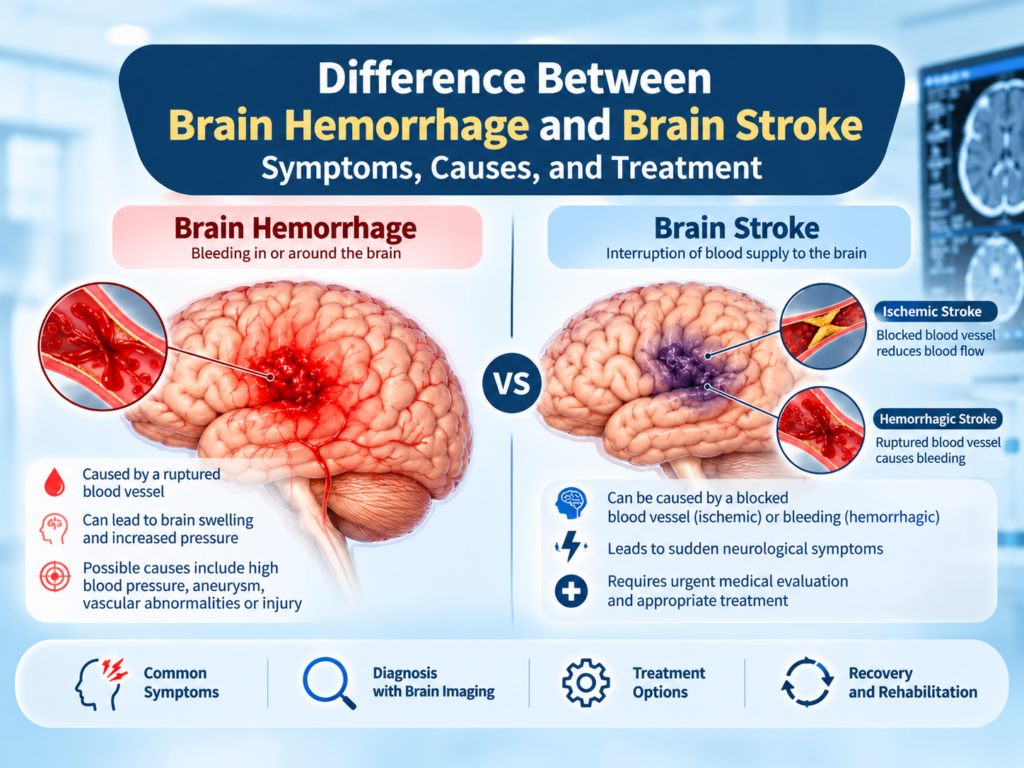
Difference Between Brain Hemorrhage and Brain Stroke: Symptoms, Causes, and Treatmen

Brain hemorrhage and brain stroke are terms people often use interchangeably. Although they are closely related, they do not mean exactly the same thing. Understanding the difference can help patients and families recognise warning signs, understand medical reports, and appreciate why urgent diagnosis is so important. A stroke happens when blood supply to part of the brain is interrupted or when a blood vessel bleeds in or around the brain. A brain hemorrhage means bleeding in or around the brain. When that bleeding damages the brain, it can cause a type of stroke called a hemorrhagic stroke. However, many strokes occur because of a blocked blood vessel and do not involve bleeding. Both conditions can be life-threatening. Symptoms may include sudden weakness, facial drooping, speech difficulties, vision changes, or severe headache. It is not possible to reliably distinguish a blocked vessel from a brain bleed by symptoms alone. Brain imaging and urgent medical assessment are essential. People researching Brain Hemorrhage Treatment in Bhopal should understand that treatment depends on the exact diagnosis, scan findings, the patient’s condition, and the risks and benefits of available options. Not every case requires surgery, and emergency symptoms should never wait for a routine appointment. What Is a Brain Stroke? A stroke occurs when part of the brain is injured because its normal blood supply is interrupted or bleeding damages brain tissue. Brain cells need a continuous supply of oxygen and nutrients. When that supply is disrupted, damage can begin quickly. There are two main types of stroke: ischemic and hemorrhagic. Identifying the type is critical because treatments suitable for one may be unsafe for the other. Ischemic stroke An ischemic stroke occurs when a blood vessel supplying the brain becomes blocked. The blockage is commonly caused by a blood clot. A clot may form in an artery supplying the brain or travel from another part of the body, including the heart. Certain heart conditions, including atrial fibrillation, can increase the risk of clots travelling to the brain. Narrowed arteries and other vascular problems may also contribute. Emergency clinicians assess when symptoms began, perform an examination, and arrange appropriate imaging. Some eligible patients may benefit from clot-dissolving medication, while selected patients with a suitable large-vessel blockage may be considered for mechanical thrombectomy. These treatments have specific eligibility criteria and must be evaluated urgently. The term Stroke Treatment in Bhopal can refer to different care pathways, but suspected acute stroke must first be assessed through emergency services. Patients should not wait for a routine appointment to determine which treatment might be appropriate. Hemorrhagic stroke A hemorrhagic stroke occurs when a blood vessel ruptures and blood collects in brain tissue or the spaces around it. The blood can directly injure brain tissue and may increase pressure inside the skull. Possible causes include high blood pressure, a ruptured aneurysm, certain vascular abnormalities, and bleeding disorders. Some cases are associated with medicines that affect clotting or with head injuries. Hemorrhagic Stroke Treatment in Bhopal depends on the source and location of bleeding, the amount of blood involved, the patient’s neurological condition, and imaging findings. Treatment may include stabilisation, close monitoring, medical management, or a procedure in selected cases. An operation is not automatically necessary for every hemorrhagic stroke. What Is a Brain Hemorrhage? A brain hemorrhage is bleeding in or around the brain. It can occur for different reasons, and the location of the bleeding influences its effects and treatment. Intracerebral hemorrhage An intracerebral hemorrhage occurs when blood leaks directly into the brain tissue. High blood pressure is an important risk factor, although other causes are possible. The bleeding can damage nearby cells and cause swelling or pressure inside the skull. Symptoms depend on the area affected and may include weakness, difficulty speaking, confusion, severe headache, seizures, or reduced consciousness. Subarachnoid hemorrhage A subarachnoid hemorrhage occurs when blood enters the space between the brain and the thin tissues surrounding it. One possible cause is a ruptured brain aneurysm, which is a weakened area of an artery wall. A sudden, extremely severe headache can be a warning sign. Some people also experience vomiting, neck stiffness, sensitivity to light, seizures, or reduced consciousness. These symptoms require immediate emergency assessment. Other causes of brain bleeding Brain bleeding may also occur after a head injury. Certain vascular abnormalities, bleeding disorders, and medicines that affect clotting can contribute in some cases. The cause cannot always be identified from symptoms alone. For people seeking a Brain Hemorrhage Doctor in Bhopal, it is important to understand that diagnosis usually involves emergency assessment and brain imaging when acute bleeding is suspected. The phrase Brain Hemorrhage Treatment in Bhopal covers a range of possible approaches, not one standard treatment. The medical team must consider the bleeding location, its cause, the patient’s condition, and the likely benefits and risks of intervention. Brain Hemorrhage vs Brain Stroke: Key Differences The main difference is that stroke is a broad medical term, while brain hemorrhage describes bleeding. A hemorrhage can cause a hemorrhagic stroke, but an ischemic stroke results from blocked blood flow rather than bleeding. Feature Brain hemorrhage Stroke Meaning Bleeding in or around the brain Brain injury caused by blocked blood flow or bleeding Main types Includes bleeding within brain tissue and bleeding around the brain Ischemic and hemorrhagic Possible causes High blood pressure, aneurysm, vascular abnormality, head injury, or bleeding risk Blood clot, narrowed or blocked artery, or a ruptured blood vessel Symptoms May include severe headache, weakness, vomiting, seizures, or reduced consciousness May include facial drooping, weakness, speech problems, vision changes, balance problems, or headache Diagnosis Clinical assessment and imaging to identify bleeding and its source Urgent examination and imaging to identify stroke type and extent Treatment Monitoring, medical care, and selected surgical or endovascular procedures Treatment depends on whether blood flow is blocked or bleeding has occurred Neurosurgical assessment May be relevant for selected bleeding-related complications May be relevant in selected hemorrhagic strokes or other structural complications Symptoms overlap, so a person cannot safely identify the type of stroke at home. A CT scan is often used […]

Uncategorized

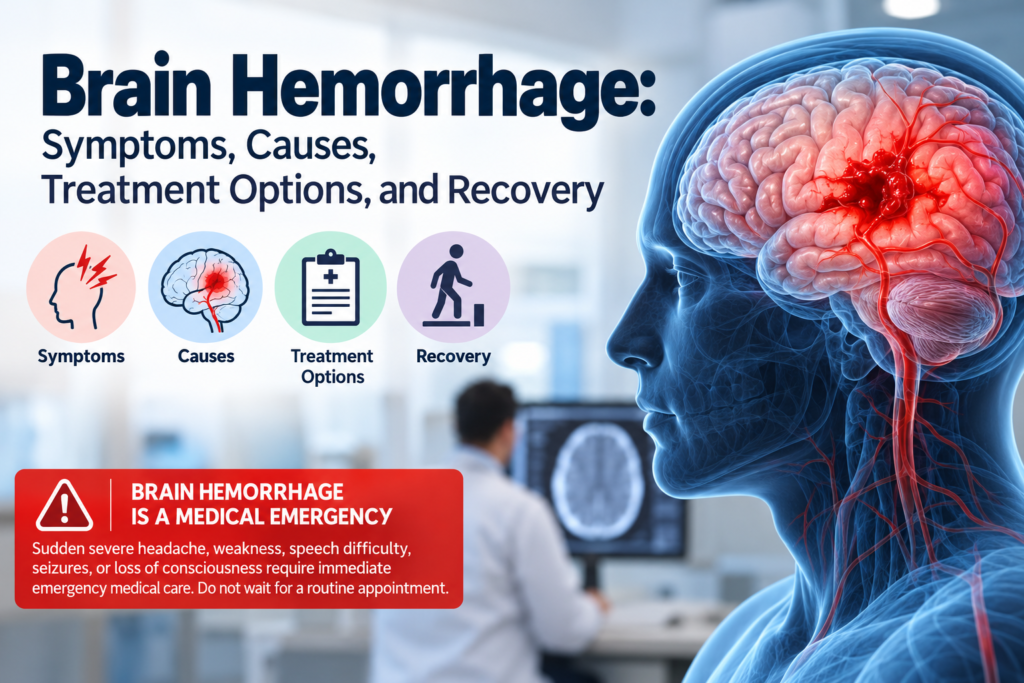
Brain Hemorrhage: Symptoms, Causes, Treatment Options, and Recovery

A brain hemorrhage occurs when a blood vessel bleeds in or around the brain. The blood may damage nearby brain tissue, interfere with normal brain function, or increase pressure inside the skull. Depending on the location and amount of bleeding, the condition can be life-threatening and needs prompt medical assessment. Bleeding may occur within brain tissue, as in an intracerebral hemorrhage, or in spaces surrounding the brain, as in a subarachnoid hemorrhage. Other forms of bleeding can occur after head injuries. The symptoms, investigations, and treatment options depend on the cause, location, severity, and the patient’s neurological condition. Brain Hemorrhage Treatment in Bhopal depends on clinical examination and imaging findings. Dr. Harshad Patil is a neurosurgeon practising in Bhopal, Madhya Pradesh. His qualifications are MBBS, MS (General Surgery), and M.Ch. (Neurosurgery). Neurosurgical assessment may be relevant in selected cases, especially when bleeding causes pressure on the brain or is linked to a vascular abnormality. Emergency warning: A sudden severe headache, new weakness, difficulty speaking, seizure, collapse, or reduced consciousness may indicate a serious emergency. Call India’s emergency number 112 or seek immediate emergency medical care. Do not wait for a routine appointment or an online response. What Is a Brain Hemorrhage? A brain hemorrhage is bleeding in or around the brain. Normally, blood remains inside vessels that carry oxygen and nutrients to brain cells. When a vessel ruptures or leaks, blood collects in an area where it can injure tissue or affect pressure inside the skull. The brain sits inside a rigid skull, so swelling or an expanding collection of blood can put pressure on delicate structures. The effects depend on where the bleeding occurs, how much blood collects, how quickly it develops, and the person’s general health. Some hemorrhages cause immediate severe symptoms; others may produce symptoms that evolve over time. Common types of brain hemorrhage Intracerebral hemorrhage: Bleeding directly into brain tissue. High blood pressure and some vascular abnormalities can contribute. Subarachnoid hemorrhage: Bleeding into the space surrounding the brain. A ruptured aneurysm is one possible cause, and a sudden severe headache can be a warning sign. Subdural hematoma: Blood collects between the brain’s outer covering and the brain surface, often after a head injury. Symptoms may develop quickly or gradually. Epidural hematoma: Blood collects between the skull and the outer covering of the brain, usually following trauma. It can require urgent assessment. These conditions have different causes and may need different treatment pathways. A scan and clinical assessment help the medical team determine what is happening. Common Symptoms of Brain Hemorrhage Symptoms vary with the location and severity of bleeding. Warning signs can include: A sudden, severe headache, especially one that reaches its maximum intensity quickly. Nausea or vomiting, particularly with other neurological symptoms. Weakness or numbness, often on one side of the body. Difficulty speaking or understanding speech. Sudden vision changes or loss of balance. A seizure. Confusion, unusual drowsiness, or difficulty staying awake. Collapse or loss of consciousness. A headache alone does not prove that bleeding has occurred, but a sudden severe headache or new neurological symptom should not be ignored. Symptoms may resemble other urgent conditions, so assessment is needed rather than trying to identify the cause at home. What should you do in an emergency? Call 112 in India or seek immediate emergency medical care if a brain hemorrhage is suspected. Do not wait for symptoms to settle, arrange a routine consultation first, or drive yourself if you are unwell. Follow the emergency dispatcher’s instructions. If the person is drowsy or unconscious, do not give food, drink, or oral medicines. Emergency assessment is important because brain imaging may be needed quickly, and some treatment decisions are time-sensitive. A Brain Hemorrhage Doctor in Bhopal may be relevant for follow-up after emergency care, but routine consultation is not a substitute for emergency treatment. What Causes a Brain Hemorrhage? The cause varies from one patient to another. Possible causes and contributing factors include: Uncontrolled high blood pressure: Long-standing high blood pressure can weaken small blood vessels and contribute to bleeding within brain tissue. Brain aneurysm: A weakened area of an artery can bulge and sometimes rupture, causing bleeding around the brain. Arteriovenous malformation (AVM): An abnormal connection between arteries and veins may increase the risk of bleeding in some people. Head injury: Trauma can damage blood vessels and cause blood to collect around the brain. Blood-thinning medicines: Anticoagulants and some other medicines may affect clotting and influence the risk or management of bleeding. Bleeding disorders: Some conditions make it harder for blood to clot normally. Other vascular or medical conditions: The patient’s history and the location of bleeding can point to other possible causes. Not every hemorrhage is caused by high blood pressure or an aneurysm. Sometimes the cause is not immediately clear and additional tests are needed. Tell the emergency team about medical conditions, recent injuries, and all medicines being taken. Do not stop prescribed medicines independently. Who Is at Risk? Risk depends on the type of hemorrhage and the person’s health. Factors that may matter include high blood pressure, smoking, certain vascular abnormalities, bleeding disorders, head trauma, age, and medicines that affect clotting. A person’s medical history may reveal additional concerns. Having a risk factor does not mean a brain hemorrhage will definitely happen. Some hemorrhages occur without obvious warning signs or a known risk factor. It is also not possible to determine the cause or personal risk from symptoms alone. People with high blood pressure should follow their clinician’s advice for monitoring and treatment. Avoid smoking, attend recommended medical reviews, and discuss medication risks with a qualified professional. Anyone who has experienced a hemorrhage should receive a prevention plan based on the cause of the original event. How Is a Brain Hemorrhage Diagnosed? Diagnosis starts with urgent assessment of symptoms, medical history, medicines, and neurological function. The medical team may check alertness, speech, movement, sensation, vision, and coordination. CT scan and MRI A CT scan of the head is commonly used during emergency evaluation because it can identify […]

Scroll to Top