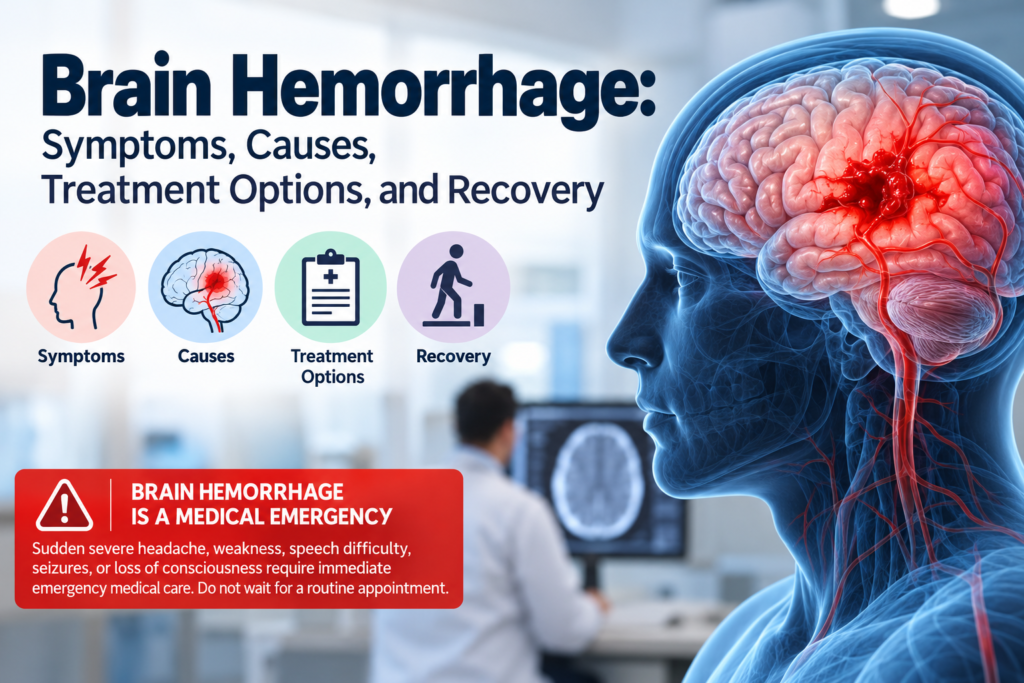
A brain hemorrhage occurs when a blood vessel bleeds in or around the brain. The blood may damage nearby brain tissue, interfere with normal brain function, or increase pressure inside the skull. Depending on the location and amount of bleeding, the condition can be life-threatening and needs prompt medical assessment. Bleeding may occur within brain tissue, as in an intracerebral hemorrhage, or in spaces surrounding the brain, as in a subarachnoid hemorrhage. Other forms of bleeding can occur after head injuries. The symptoms, investigations, and treatment options depend on the cause, location, severity, and the patient’s neurological condition. Brain Hemorrhage Treatment in Bhopal depends on clinical examination and imaging findings. Dr. Harshad Patil is a neurosurgeon practising in Bhopal, Madhya Pradesh. His qualifications are MBBS, MS (General Surgery), and M.Ch. (Neurosurgery). Neurosurgical assessment may be relevant in selected cases, especially when bleeding causes pressure on the brain or is linked to a vascular abnormality.
Emergency warning: A sudden severe headache, new weakness, difficulty speaking, seizure, collapse, or reduced consciousness may indicate a serious emergency. Call India’s emergency number 112 or seek immediate emergency medical care. Do not wait for a routine appointment or an online response.
What Is a Brain Hemorrhage?
A brain hemorrhage is bleeding in or around the brain. Normally, blood remains inside vessels that carry oxygen and nutrients to brain cells. When a vessel ruptures or leaks, blood collects in an area where it can injure tissue or affect pressure inside the skull. The brain sits inside a rigid skull, so swelling or an expanding collection of blood can put pressure on delicate structures. The effects depend on where the bleeding occurs, how much blood collects, how quickly it develops, and the person’s general health. Some hemorrhages cause immediate severe symptoms; others may produce symptoms that evolve over time.
Common types of brain hemorrhage
- Intracerebral hemorrhage: Bleeding directly into brain tissue. High blood pressure and some vascular abnormalities can contribute.
- Subarachnoid hemorrhage: Bleeding into the space surrounding the brain. A ruptured aneurysm is one possible cause, and a sudden severe headache can be a warning sign.
- Subdural hematoma: Blood collects between the brain’s outer covering and the brain surface, often after a head injury. Symptoms may develop quickly or gradually.
- Epidural hematoma: Blood collects between the skull and the outer covering of the brain, usually following trauma. It can require urgent assessment.
These conditions have different causes and may need different treatment pathways. A scan and clinical assessment help the medical team determine what is happening.
Common Symptoms of Brain Hemorrhage
Symptoms vary with the location and severity of bleeding. Warning signs can include:
- A sudden, severe headache, especially one that reaches its maximum intensity quickly.
- Nausea or vomiting, particularly with other neurological symptoms.
- Weakness or numbness, often on one side of the body.
- Difficulty speaking or understanding speech.
- Sudden vision changes or loss of balance.
- A seizure.
- Confusion, unusual drowsiness, or difficulty staying awake.
- Collapse or loss of consciousness.
A headache alone does not prove that bleeding has occurred, but a sudden severe headache or new neurological symptom should not be ignored. Symptoms may resemble other urgent conditions, so assessment is needed rather than trying to identify the cause at home.
What should you do in an emergency?
Call 112 in India or seek immediate emergency medical care if a brain hemorrhage is suspected. Do not wait for symptoms to settle, arrange a routine consultation first, or drive yourself if you are unwell. Follow the emergency dispatcher’s instructions. If the person is drowsy or unconscious, do not give food, drink, or oral medicines. Emergency assessment is important because brain imaging may be needed quickly, and some treatment decisions are time-sensitive. A Brain Hemorrhage Doctor in Bhopal may be relevant for follow-up after emergency care, but routine consultation is not a substitute for emergency treatment.
What Causes a Brain Hemorrhage?
The cause varies from one patient to another. Possible causes and contributing factors include:
- Uncontrolled high blood pressure: Long-standing high blood pressure can weaken small blood vessels and contribute to bleeding within brain tissue.
- Brain aneurysm: A weakened area of an artery can bulge and sometimes rupture, causing bleeding around the brain.
- Arteriovenous malformation (AVM): An abnormal connection between arteries and veins may increase the risk of bleeding in some people.
- Head injury: Trauma can damage blood vessels and cause blood to collect around the brain.
- Blood-thinning medicines: Anticoagulants and some other medicines may affect clotting and influence the risk or management of bleeding.
- Bleeding disorders: Some conditions make it harder for blood to clot normally.
- Other vascular or medical conditions: The patient’s history and the location of bleeding can point to other possible causes.
Not every hemorrhage is caused by high blood pressure or an aneurysm. Sometimes the cause is not immediately clear and additional tests are needed. Tell the emergency team about medical conditions, recent injuries, and all medicines being taken. Do not stop prescribed medicines independently.
Who Is at Risk?
Risk depends on the type of hemorrhage and the person’s health. Factors that may matter include high blood pressure, smoking, certain vascular abnormalities, bleeding disorders, head trauma, age, and medicines that affect clotting. A person’s medical history may reveal additional concerns. Having a risk factor does not mean a brain hemorrhage will definitely happen. Some hemorrhages occur without obvious warning signs or a known risk factor. It is also not possible to determine the cause or personal risk from symptoms alone. People with high blood pressure should follow their clinician’s advice for monitoring and treatment. Avoid smoking, attend recommended medical reviews, and discuss medication risks with a qualified professional. Anyone who has experienced a hemorrhage should receive a prevention plan based on the cause of the original event.
How Is a Brain Hemorrhage Diagnosed?
Diagnosis starts with urgent assessment of symptoms, medical history, medicines, and neurological function. The medical team may check alertness, speech, movement, sensation, vision, and coordination.
CT scan and MRI
A CT scan of the head is commonly used during emergency evaluation because it can identify many forms of acute bleeding quickly. MRI may provide additional detail in selected situations. The choice depends on the clinical condition and the questions the team needs to answer.
Blood vessel imaging
CT angiography or MR angiography may be used to investigate an aneurysm or another blood vessel abnormality. Digital subtraction angiography, a specialised test that produces detailed images of blood vessels, may be considered when more information is needed for diagnosis or treatment planning.
Blood tests
Blood tests may assess blood counts, clotting, and other medical factors that can influence treatment. Not every patient needs every test. The emergency and specialist teams choose investigations according to the symptoms, examination, and initial scan findings.
Imaging helps identify where the blood is located, estimate the extent of bleeding, assess pressure effects, and investigate possible causes. Do not delay emergency care to arrange an elective scan or gather previous paperwork.
Brain Hemorrhage Treatment in Bhopal: Available Treatment Options
Treatment is individualised. The plan depends on the cause, location and amount of bleeding, neurological condition, scan findings, medicines, and overall health. Brain Hemorrhage Treatment in Bhopal may involve hospital-based monitoring, medical management, a procedure, or a combination of approaches. The treating team decides what is appropriate.
1. Emergency stabilisation and monitoring
The first priority is to assess and stabilise the patient. Care may include monitoring breathing, circulation, consciousness, and neurological changes. Some patients need close observation and repeat examinations or imaging.
2. Medical management
Clinicians may manage blood pressure and other medical factors when appropriate. If the patient takes blood-thinning medicine or has a clotting disorder, the team will assess whether specific measures are needed. Medicines must be managed under professional supervision; patients should not independently start or stop medication.
3. Observation and follow-up
Some hemorrhages can be managed without immediate surgery. Close monitoring may be recommended when the medical team believes this is appropriate. The plan may include repeat scans, neurological checks, and follow-up to assess recovery or identify complications.
4. Endovascular treatment
Some causes of bleeding, such as selected aneurysms, may be treated using catheter-based techniques by appropriately trained specialists. Whether an endovascular approach is suitable depends on the vascular anatomy, the cause of bleeding, the patient’s condition, and the available specialist assessment.
5. Neurosurgical intervention
In selected cases, surgery may be considered to relieve pressure, address a blood collection, or treat an underlying structural problem. The possible benefits and risks must be assessed individually. Not every patient with a brain hemorrhage needs an operation, and surgery is not automatically the best choice.
When Is Brain Hemorrhage Surgery Considered?
A procedure may be considered when the location or amount of bleeding, pressure on the brain, changes in consciousness, or the underlying cause makes intervention appropriate. The decision may also depend on the patient’s age, other medical conditions, imaging findings, and whether the patient is stable enough for a procedure. The goals can differ. One procedure may aim to remove a blood collection or reduce harmful pressure; another may address the source of bleeding, such as a particular vascular abnormality. In some cases, an endovascular treatment may be considered instead of open surgery. In others, careful monitoring and medical treatment may be more appropriate.
A Brain Hemorrhage Surgeon in Bhopal may assess clinical findings and imaging when a neurosurgical opinion is needed. Patients and families should ask what the proposed intervention is intended to achieve, what risks are involved, what alternatives exist, and what may happen if treatment is not undertaken. Brain Hemorrhage Surgery in Bhopal is not one standard operation for every type of bleeding. The procedure and treatment location must be confirmed by the treating team. No intervention can guarantee a particular outcome, and the final decision depends on the individual case.
Why Neurosurgical Assessment May Matter
A neurosurgeon may be involved when bleeding affects structures that may require surgical evaluation, when pressure effects are a concern, or when a vascular abnormality needs assessment. The role of the neurosurgeon depends on the diagnosis and the wider clinical team’s recommendations. A Brain Hemorrhage Specialist in Bhopal may help patients understand scan findings, discuss whether a neurosurgical opinion is relevant, and explain possible benefits and risks of a proposed approach. Assessment may involve reviewing the location and extent of bleeding, the patient’s neurological condition, and relevant medical history.
The treating team may include emergency physicians, neurologists, neurosurgeons, intensive care clinicians, and endovascular specialists. They work according to the patient’s needs and the resources of the appropriate treatment facility. The exact procedure, specialist involvement, and location of care must be confirmed directly rather than assumed.
Why Consult Dr. Harshad Patil?
Dr. Harshad Patil is a neurosurgeon practising in Bhopal, Madhya Pradesh. His verified qualifications are MBBS, MS (General Surgery), and M.Ch. (Neurosurgery). He completed MBBS at Terna Medical College & Hospital, Navi Mumbai; MS in General Surgery at Dr. Vasantrao Pawar Medical College & Hospital, Nashik; and M.Ch. in Neurosurgery at Sri Aurobindo Medical College and PG Institute, Indore.
Neurosurgical training is relevant when selected brain hemorrhage cases need an opinion about possible surgical intervention. During a non-emergency consultation after initial assessment, patients and families may discuss symptoms, scan reports, medical history, treatment considerations, and follow-up needs.
When looking for a Brain Hemorrhage Doctor in Bhopal, patients should seek verified qualifications and clear explanations of the diagnosis and available options. Useful questions include what the scan shows, what may have caused the bleeding, whether more tests are needed, and which symptoms should prompt urgent reassessment.
A Brain Hemorrhage Treatment Specialist in Bhopal should explain the purpose of any proposed treatment, potential risks and benefits, reasonable alternatives, and the follow-up plan in language the patient and family can understand. Dr. Patil’s qualifications do not establish an unprovided hospital affiliation, specific equipment, or the availability of every procedure discussed in this article.
Routine consultation must not replace emergency assessment. If acute brain bleeding is suspected, call 112 or seek immediate emergency medical care rather than waiting for a routine appointment.
Brain Hemorrhage Recovery: What Should Patients Expect?
Recovery varies according to the location and amount of bleeding, the cause, complications, treatment received, and the patient’s overall health. Some people recover with few lasting difficulties, while others need ongoing assistance with movement, communication, memory, or daily activities.
Follow-up may involve medical reviews, repeat imaging when recommended, medication review, and rehabilitation. The treating team determines the plan based on the patient’s progress and needs.
- Physiotherapy may help with movement, strength, and balance.
- Occupational therapy may support daily activities and independence.
- Speech and language therapy may help with communication or swallowing difficulties.
- Medication adherence is important; discuss side effects or concerns with the treating clinician.
- Family support can help patients attend appointments and follow the recovery plan.
A Brain Hemorrhage Specialist in Bhopal may help explain follow-up recommendations after the emergency phase of care. Recovery timelines differ, and progress may be gradual. New or worsening neurological symptoms require prompt medical assessment; sudden severe symptoms should be treated as an emergency.
How Can the Risk of Another Brain Hemorrhage Be Reduced?
Prevention depends on what caused the original bleeding. The treating clinician may recommend monitoring and managing blood pressure, avoiding smoking, attending follow-up appointments, and managing other relevant health conditions. Take prescribed medicines as directed. If you take an anticoagulant or another medicine that affects clotting, discuss its risks and benefits with the treating clinician rather than stopping it yourself. Patients treated for an aneurysm or another vascular abnormality should follow the specialist’s advice about monitoring and further care. Not every hemorrhage can be prevented, and risk-reduction steps differ between patients. Ask the treating team which factors matter most in your case and which symptoms should trigger urgent medical attention.
Brain Hemorrhage Care in Bhopal and Nearby Areas
Patients and families in Bhopal, including Arera Colony, Shahpura, MP Nagar, Kolar Road, and Hoshangabad Road, may search for information about brain bleeding, specialist assessment, and recovery. These localities are included for relevance only; no specific clinic address or branch location is stated here. For a non-emergency enquiry or follow-up after hospital assessment, patients can contact Dr. Harshad Patil to ask about routine consultation arrangements. Confirm appointment availability and the consultation location before travelling. Bring available scan reports, discharge summaries, a medication list, and other relevant medical records.
A Brain Hemorrhage Doctor in Bhopal may discuss existing reports and questions about the next steps during a routine consultation. However, sudden severe headache, new weakness, difficulty speaking, seizure, collapse, or reduced consciousness requires immediate emergency medical care. Do not travel to a routine appointment when acute brain hemorrhage is suspected.
Frequently Asked Questions
1. What are the first symptoms of a brain hemorrhage?
Symptoms may include a sudden severe headache, vomiting, weakness, speech difficulty, vision changes, seizure, confusion, or reduced consciousness. If brain bleeding is suspected, call 112 or seek immediate emergency care.
2. What are common causes of brain hemorrhage?
Possible causes include uncontrolled high blood pressure, a ruptured aneurysm, an AVM, head injury, bleeding disorders, and medicines that affect clotting. The cause varies, so medical assessment and appropriate imaging are needed.
3. How is a brain hemorrhage diagnosed?
Doctors may use a neurological examination, CT scan, MRI, blood vessel imaging, and blood tests depending on the clinical situation. Not every patient requires every test.
4. Does every brain hemorrhage require surgery?
No. Some cases are managed with medical treatment and close monitoring; others may need a surgical or endovascular procedure. The decision depends on the type, location, severity, imaging findings, and patient’s condition.
5. When may Brain Hemorrhage Surgery in Bhopal be considered?
Brain Hemorrhage Surgery in Bhopal may be considered when bleeding causes harmful pressure, when a collection needs treatment, or when a specific underlying cause requires intervention. The treating team must explain the expected benefits, risks, and alternatives.
6. How long does recovery take?
Recovery varies with the cause and severity of bleeding, the brain area affected, complications, and treatment. Some patients need rehabilitation and long-term follow-up. There is no single recovery timeline for everyone.
7. When should someone consult a Brain Hemorrhage Specialist in Bhopal?
A specialist consultation may be appropriate for non-emergency follow-up after assessment, to discuss scan findings or clarify a treatment plan. A Brain Hemorrhage Specialist in Bhopal does not replace emergency care for sudden or severe symptoms.
8. What should I ask a Brain Hemorrhage Surgeon in Bhopal?
Ask what the scans show, why a procedure is being considered, what alternatives exist, what risks are involved, and what follow-up may be needed. A Brain Hemorrhage Surgeon in Bhopal should discuss the case-specific considerations; the need for surgery depends on the clinical findings.
9. Can a brain hemorrhage happen without warning?
Yes. Some hemorrhages occur suddenly and without obvious prior symptoms. Sudden severe headache, new weakness, seizure, collapse, or reduced consciousness requires immediate emergency assessment.