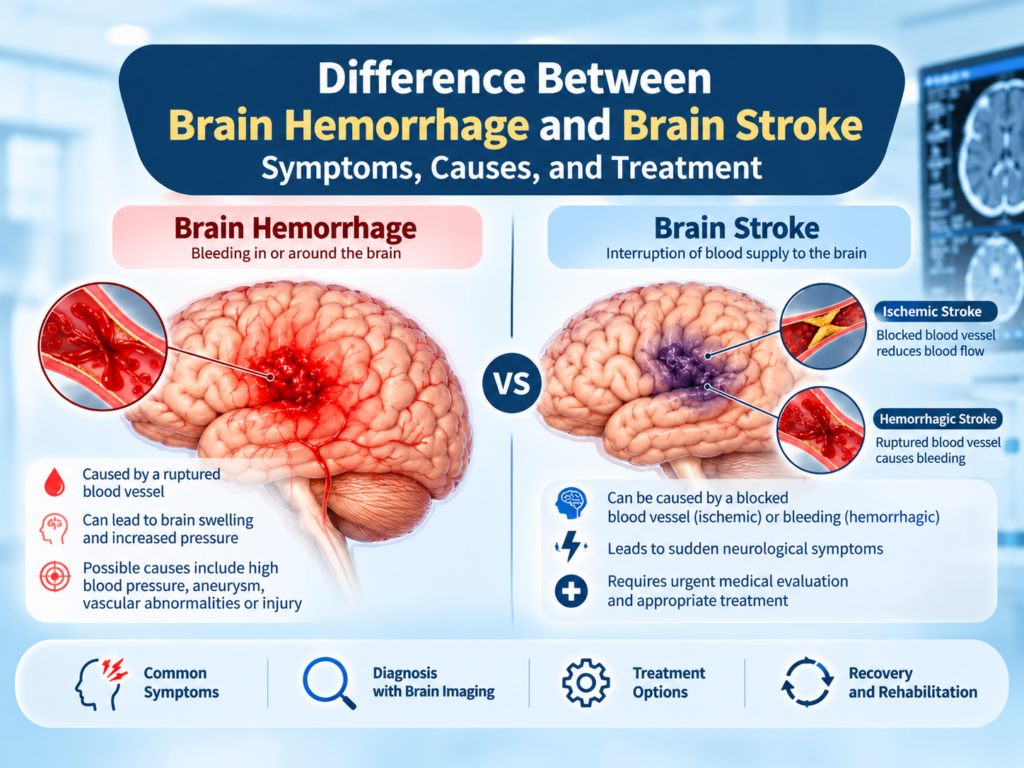
Brain hemorrhage and brain stroke are terms people often use interchangeably. Although they are closely related, they do not mean exactly the same thing. Understanding the difference can help patients and families recognise warning signs, understand medical reports, and appreciate why urgent diagnosis is so important. A stroke happens when blood supply to part of the brain is interrupted or when a blood vessel bleeds in or around the brain. A brain hemorrhage means bleeding in or around the brain. When that bleeding damages the brain, it can cause a type of stroke called a hemorrhagic stroke. However, many strokes occur because of a blocked blood vessel and do not involve bleeding. Both conditions can be life-threatening. Symptoms may include sudden weakness, facial drooping, speech difficulties, vision changes, or severe headache. It is not possible to reliably distinguish a blocked vessel from a brain bleed by symptoms alone. Brain imaging and urgent medical assessment are essential. People researching Brain Hemorrhage Treatment in Bhopal should understand that treatment depends on the exact diagnosis, scan findings, the patient’s condition, and the risks and benefits of available options. Not every case requires surgery, and emergency symptoms should never wait for a routine appointment.
What Is a Brain Stroke?
A stroke occurs when part of the brain is injured because its normal blood supply is interrupted or bleeding damages brain tissue. Brain cells need a continuous supply of oxygen and nutrients. When that supply is disrupted, damage can begin quickly. There are two main types of stroke: ischemic and hemorrhagic. Identifying the type is critical because treatments suitable for one may be unsafe for the other.
Ischemic stroke
An ischemic stroke occurs when a blood vessel supplying the brain becomes blocked. The blockage is commonly caused by a blood clot. A clot may form in an artery supplying the brain or travel from another part of the body, including the heart. Certain heart conditions, including atrial fibrillation, can increase the risk of clots travelling to the brain. Narrowed arteries and other vascular problems may also contribute.
Emergency clinicians assess when symptoms began, perform an examination, and arrange appropriate imaging. Some eligible patients may benefit from clot-dissolving medication, while selected patients with a suitable large-vessel blockage may be considered for mechanical thrombectomy. These treatments have specific eligibility criteria and must be evaluated urgently. The term Stroke Treatment in Bhopal can refer to different care pathways, but suspected acute stroke must first be assessed through emergency services. Patients should not wait for a routine appointment to determine which treatment might be appropriate.
Hemorrhagic stroke
A hemorrhagic stroke occurs when a blood vessel ruptures and blood collects in brain tissue or the spaces around it. The blood can directly injure brain tissue and may increase pressure inside the skull. Possible causes include high blood pressure, a ruptured aneurysm, certain vascular abnormalities, and bleeding disorders. Some cases are associated with medicines that affect clotting or with head injuries.
Hemorrhagic Stroke Treatment in Bhopal depends on the source and location of bleeding, the amount of blood involved, the patient’s neurological condition, and imaging findings. Treatment may include stabilisation, close monitoring, medical management, or a procedure in selected cases. An operation is not automatically necessary for every hemorrhagic stroke.
What Is a Brain Hemorrhage?
A brain hemorrhage is bleeding in or around the brain. It can occur for different reasons, and the location of the bleeding influences its effects and treatment.
Intracerebral hemorrhage
An intracerebral hemorrhage occurs when blood leaks directly into the brain tissue. High blood pressure is an important risk factor, although other causes are possible. The bleeding can damage nearby cells and cause swelling or pressure inside the skull. Symptoms depend on the area affected and may include weakness, difficulty speaking, confusion, severe headache, seizures, or reduced consciousness.
Subarachnoid hemorrhage
A subarachnoid hemorrhage occurs when blood enters the space between the brain and the thin tissues surrounding it. One possible cause is a ruptured brain aneurysm, which is a weakened area of an artery wall. A sudden, extremely severe headache can be a warning sign. Some people also experience vomiting, neck stiffness, sensitivity to light, seizures, or reduced consciousness. These symptoms require immediate emergency assessment.
Other causes of brain bleeding
Brain bleeding may also occur after a head injury. Certain vascular abnormalities, bleeding disorders, and medicines that affect clotting can contribute in some cases. The cause cannot always be identified from symptoms alone. For people seeking a Brain Hemorrhage Doctor in Bhopal, it is important to understand that diagnosis usually involves emergency assessment and brain imaging when acute bleeding is suspected. The phrase Brain Hemorrhage Treatment in Bhopal covers a range of possible approaches, not one standard treatment. The medical team must consider the bleeding location, its cause, the patient’s condition, and the likely benefits and risks of intervention.
Brain Hemorrhage vs Brain Stroke: Key Differences
The main difference is that stroke is a broad medical term, while brain hemorrhage describes bleeding. A hemorrhage can cause a hemorrhagic stroke, but an ischemic stroke results from blocked blood flow rather than bleeding.
| Feature | Brain hemorrhage | Stroke |
|---|---|---|
| Meaning | Bleeding in or around the brain | Brain injury caused by blocked blood flow or bleeding |
| Main types | Includes bleeding within brain tissue and bleeding around the brain | Ischemic and hemorrhagic |
| Possible causes | High blood pressure, aneurysm, vascular abnormality, head injury, or bleeding risk | Blood clot, narrowed or blocked artery, or a ruptured blood vessel |
| Symptoms | May include severe headache, weakness, vomiting, seizures, or reduced consciousness | May include facial drooping, weakness, speech problems, vision changes, balance problems, or headache |
| Diagnosis | Clinical assessment and imaging to identify bleeding and its source | Urgent examination and imaging to identify stroke type and extent |
| Treatment | Monitoring, medical care, and selected surgical or endovascular procedures | Treatment depends on whether blood flow is blocked or bleeding has occurred |
| Neurosurgical assessment | May be relevant for selected bleeding-related complications | May be relevant in selected hemorrhagic strokes or other structural complications |
Symptoms overlap, so a person cannot safely identify the type of stroke at home. A CT scan is often used urgently to help identify bleeding. Other tests may be required to investigate the cause and guide treatment.
Symptoms of Brain Hemorrhage and Stroke
Symptoms may appear suddenly and can vary according to the brain area affected. Common warning signs include:
- Sudden weakness or numbness, particularly on one side of the body.
- Facial drooping or an uneven smile.
- Difficulty speaking or understanding speech.
- Sudden blurred vision or loss of vision.
- Dizziness, loss of balance, or difficulty walking.
- Sudden confusion.
- A sudden, severe headache, especially with other neurological symptoms.
- Seizures, collapse, or reduced consciousness.
A brain aneurysm or another vascular abnormality may sometimes cause no noticeable symptoms before a complication develops. A headache alone does not confirm a brain hemorrhage, but a sudden, unusually severe headache must be taken seriously.
Emergency warning: When to seek immediate medical help
Suspected stroke or brain hemorrhage is a medical emergency. Call 112 in India or seek immediate emergency medical care.
Do not wait for symptoms to disappear, arrange a routine consultation, or try to work out the stroke type at home. Do not independently take aspirin or other medicines when a brain bleed is possible unless an appropriate medical professional specifically instructs you to do so. If the person is unconscious or has difficulty swallowing, do not give food, drink, or oral medicines. Follow the emergency dispatcher’s instructions. If possible, note when symptoms started or when the person was last known to be well, but do not delay getting help to collect documents. A Brain Hemorrhage Specialist in Bhopal may be relevant for follow-up or a neurosurgical opinion after emergency assessment, but routine specialist consultation is not a substitute for emergency care.
Causes and Risk Factors
The risk factors for ischemic and hemorrhagic strokes overlap in some areas but differ in others.
Risk factors for ischemic stroke
Ischemic stroke may be associated with:
- High blood pressure: Can damage blood vessels and contribute to vascular disease.
- Diabetes: May increase damage to blood vessels over time.
- High cholesterol: Can contribute to plaque build-up in arteries.
- Smoking: Damages blood vessels and increases vascular risk.
- Atrial fibrillation and other heart conditions: Can increase the risk of clots travelling to the brain.
- Previous stroke or transient ischemic attack (TIA): A previous event may indicate increased future risk.
Risk factors for brain hemorrhage
Bleeding in or around the brain may be associated with:
- High blood pressure: An important risk factor for certain types of brain bleeding.
- Brain aneurysms: Some aneurysms can rupture and cause bleeding.
- Vascular abnormalities: Conditions such as arteriovenous malformations may carry a risk of hemorrhage.
- Head injury: Trauma can cause bleeding inside the skull.
- Bleeding disorders and certain medicines: These may affect the body’s ability to form clots.
Having a risk factor does not mean a person will definitely have a stroke or hemorrhage. Risk also depends on age, medical history, the underlying condition, and other individual factors. Patients should discuss prevention with a qualified healthcare professional. Do not stop prescribed medicines or begin a new medicine without appropriate medical advice.
How Are Brain Hemorrhage and Stroke Diagnosed?
Urgent assessment is essential when a stroke is suspected. A clinician reviews the symptoms, when they began, medical history, current medicines, and neurological examination findings.
Neurological examination
The medical team may assess alertness, speech, movement, sensation, vision, balance, and coordination. The examination helps identify possible neurological problems, but it cannot always establish whether bleeding or a blockage has occurred.
CT scan of the brain
A CT scan is commonly used early in suspected stroke because it can help identify bleeding and other urgent findings. It can guide decisions about which treatments may be appropriate.
MRI of the brain
An MRI provides detailed images of brain structures. It may help clarify the extent or type of injury when clinically appropriate.
Blood vessel imaging
CT angiography, MR angiography, or digital subtraction angiography may be used when the medical team needs more information about an aneurysm, vascular abnormality, or blood vessel blockage.
Blood tests and heart investigations
Blood tests may check glucose, blood counts, clotting, and other factors that affect treatment. An ECG or additional heart investigations may be considered when a heart-related source of a clot is suspected.
Not every patient needs every test. The treating team selects investigations according to the symptoms, urgency, examination, and initial findings.
Treatment Options for Brain Hemorrhage and Stroke
Treatment depends on the diagnosis, time since symptoms began, scan results, the patient’s overall condition, and eligibility for specific interventions.
Treatment for ischemic stroke
For eligible patients, clinicians may consider clot-dissolving medication within an appropriate time window. Some patients with a suitable large-vessel blockage may be assessed for mechanical thrombectomy, which removes a clot using specialised equipment. The decision depends on timing, brain and blood vessel imaging, contraindications, and specialist assessment. Other care may include monitoring, treatment of contributing conditions, prevention of another vascular event, and rehabilitation. Brain Stroke Treatment in Bhopal must be based on the confirmed or suspected stroke type and urgent clinical findings. A treatment intended to restore blood flow may be unsuitable when bleeding is present, which is one reason brain imaging is so important.
Treatment for hemorrhagic stroke
Initial care may involve stabilising breathing and circulation, monitoring neurological status, managing blood pressure where appropriate, and addressing relevant bleeding risks. The team may assess the bleeding source and whether pressure is building inside the skull. Some patients need close monitoring and medical management. Others may require a neurosurgical or endovascular procedure, depending on the location and cause of bleeding, the patient’s condition, and the likely risks and benefits.
Brain Hemorrhage Treatment in Bhopal should therefore be planned according to the individual diagnosis rather than assuming that every hemorrhage needs an operation. A Brain Hemorrhage Treatment Specialist in Bhopal may be relevant when a patient needs an appropriate specialist opinion, but emergency evaluation comes first in acute cases.
Why treatment must be individualised
There is no single treatment suitable for every stroke or hemorrhage. Care may involve emergency physicians, neurologists, neurosurgeons, intensive care specialists, interventional specialists, nurses, and rehabilitation professionals. The availability of a specific procedure and the appropriate treatment facility must be confirmed directly with the treating team. Stroke Treatment in Bhopal may involve different clinical pathways depending on the condition and the services needed.
When Is Brain Hemorrhage Surgery Necessary?
Surgery may be considered in selected cases, but the decision depends on the type of hemorrhage, its location and size, pressure effects, the patient’s neurological condition, and the cause of bleeding.
The treating team may assess:
- Whether the bleeding is causing pressure on the brain.
- The location and amount of blood involved.
- Whether an aneurysm or another vascular abnormality is responsible.
- The patient’s current condition and other medical risks.
- Whether surgery, an endovascular procedure, or careful monitoring is most appropriate.
- The potential benefits, complications, and alternatives.
Brain Hemorrhage Surgery in Bhopal is not one standard operation. The procedure, if required, depends on the underlying condition and the patient’s clinical findings. Some people can be treated without surgery, while others may need an intervention to address the bleeding source or a serious complication.
A Brain Hemorrhage Surgeon in Bhopal may help explain neurosurgical considerations in cases where a surgical opinion is appropriate. Patients and families should ask why a procedure is being recommended, what it aims to achieve, what alternatives exist, and what risks may be involved.
No procedure guarantees a particular outcome. The decision should be made by the appropriate treating team after reviewing the clinical findings and discussing the options with the patient or family whenever possible.
Why Consult Dr. Harshad Patil for a Neurosurgical Opinion?
Dr. Harshad Patil is a neurosurgeon practising in Bhopal, Madhya Pradesh. His verified qualifications are MBBS, MS (General Surgery), and M.Ch. (Neurosurgery).
His educational background includes:
- MBBS: Terna Medical College & Hospital, Navi Mumbai.
- MS (General Surgery): Dr. Vasantrao Pawar Medical College & Hospital, Nashik.
- M.Ch. (Neurosurgery): Sri Aurobindo Medical College and PG Institute, Indore.
Neurosurgical training can be relevant when selected brain hemorrhage cases, pressure-related complications, aneurysms, or other structural problems require specialist assessment. A consultation may help a patient understand scan findings, review medical history, and discuss whether a neurosurgical opinion or further evaluation is appropriate.
Someone looking for a Brain Hemorrhage Doctor in Bhopal should bring available scan reports, discharge summaries, previous medical records, and a current medication list. Patients can ask the doctor to explain the diagnosis, possible treatment pathways, risks, and follow-up considerations in straightforward language.
A Stroke Neurosurgeon in Bhopal may be relevant in selected cases involving bleeding or other complications that need neurosurgical input. However, not every stroke requires neurosurgery, and the appropriate care team may include emergency, stroke, intensive care, endovascular, and rehabilitation specialists.
The consultation location, appointment availability, and specific treatment arrangements should be confirmed directly. No particular hospital affiliation, procedure availability, or treatment outcome should be assumed from a doctor’s qualifications alone.
Anyone with sudden stroke symptoms or suspected acute brain bleeding must seek emergency care immediately rather than waiting for a routine consultation.
Recovery After Brain Hemorrhage or Stroke
Recovery varies from person to person. It depends on the stroke type, the severity and location of brain injury, treatment, complications, and general health. Some patients regain many abilities, while others need longer-term rehabilitation or assistance with daily activities.
Recovery and follow-up may include:
- Medical reviews: Follow-up appointments and investigations as recommended.
- Physiotherapy: Support for strength, movement, walking, and balance when needed.
- Speech and language therapy: Help with communication or swallowing difficulties when indicated.
- Occupational therapy: Support for daily activities and adapting to changes in ability.
- Medication adherence: Taking prescribed medicines as directed and reporting possible side effects.
- Risk-factor management: Following advice about blood pressure, diabetes, cholesterol, smoking, and other relevant factors.
- Family support: Helping caregivers understand the care plan, safety needs, and warning signs.
A Brain Hemorrhage Specialist in Bhopal may be involved in appropriate follow-up when a specialist review is needed. The actual recovery plan should be determined by the patient’s treating team and may involve several healthcare professionals. There is no fixed recovery timeline that applies to everyone. New or worsening weakness, speech difficulty, severe headache, seizures, collapse, or reduced consciousness needs urgent medical attention, even if the patient has previously been diagnosed or treated.
Brain Hemorrhage and Stroke Care in Bhopal
People in Arera Colony, Shahpura, MP Nagar, Kolar Road, and Hoshangabad Road may search for information about stroke symptoms, brain bleeding, treatment options, and specialist consultation in Bhopal. Understanding the differences between the conditions can help patients and families prepare useful questions for a medical appointment. For non-emergency concerns or follow-up after hospital assessment, patients can contact Dr. Harshad Patil to enquire about routine consultation arrangements. Confirm the appointment availability and location before travelling, and bring relevant medical records and imaging reports.
Brain Hemorrhage Treatment in Bhopal depends on the diagnosis and the clinical assessment, not simply on the name of the condition. Some cases may require a neurosurgical opinion, while others may be managed through different specialist pathways. Patients should ask which team is responsible for their care and where any proposed treatment would take place. Residents of nearby areas should not delay emergency care to travel to a particular doctor or clinic. Suspected stroke or brain hemorrhage requires immediate assessment at an appropriate emergency facility, regardless of the patient’s location.
Frequently Asked Questions
1. What is the main difference between brain hemorrhage and brain stroke?
A brain hemorrhage means bleeding in or around the brain. A stroke is a broader term for brain injury caused by blocked blood flow or bleeding. A hemorrhage can cause a hemorrhagic stroke, while an ischemic stroke occurs because blood flow is blocked.
2. Is a brain hemorrhage always considered a stroke?
Not every small or incidental area of bleeding is automatically classified as a stroke, because the context and cause matter. However, bleeding that causes brain injury is a form of hemorrhagic stroke. Medical assessment and imaging are needed to establish the diagnosis.
3. What are the early warning signs of a stroke?
Warning signs can include sudden facial drooping, weakness on one side, difficulty speaking, vision changes, balance problems, confusion, or a sudden severe headache. Call 112 or seek immediate emergency care if stroke is suspected.
4. How can doctors distinguish an ischemic stroke from a hemorrhagic stroke?
Doctors assess symptoms, medical history, and neurological findings, then use brain imaging. A CT scan is often performed urgently to help identify bleeding. Other scans and tests may be used to clarify the cause and guide treatment.
5. When may brain hemorrhage surgery be necessary?
It may be considered when the location or amount of bleeding, pressure effects, or underlying cause makes an intervention appropriate. Brain Hemorrhage Surgery in Bhopal depends on individual clinical findings and the expected benefits and risks. Some patients do not require surgery.
6. Is neurosurgery required for every hemorrhagic stroke?
No. Some patients may be managed with monitoring and medical treatment, while selected cases require surgery or an endovascular procedure. A Brain Hemorrhage Surgeon in Bhopal may provide a neurosurgical opinion when appropriate, but the decision depends on the diagnosis and treating team’s assessment.
7. What tests are used to diagnose brain hemorrhage?
A CT scan is commonly used early to look for bleeding. MRI, blood vessel imaging, blood tests, and other investigations may be recommended depending on the suspected cause and the patient’s condition. Not everyone needs every test.
8. How long does recovery after a stroke or brain hemorrhage take?
Recovery depends on the severity and location of brain injury, the treatment received, complications, and general health. Some people improve over weeks or months, while others need longer-term rehabilitation. No fixed recovery period can be guaranteed.