- Home
- Craniotomy Surgery
Craniotomy Surgery in bhopal
Expert brain surgery for tumors, head injury and brain haemorrhage
Overview
When a doctor says you or your family member needs brain surgery, fear and confusion often arrive together. What exactly will be done? Is it safe? How long will recovery take? Who can I trust? Dr. Harshad Patil, an M.Ch-qualified Neurosurgeon in Bhopal, provides complete Craniotomy Surgery in Bhopal, with careful planning before the operation, precise surgery, and attentive care during recovery. Many families look for a Brain Surgery Specialist in Bhopal who will explain the problem in simple words, discuss every option honestly and treat the patient like family. This page explains what a craniotomy is, when it is needed, how it is performed, what recovery looks like, and why patients from Bhopal and nearby districts choose our clinic.
Brain Tumor & Brain Surgery
Discuss this with the clinic
We bring the right people together to challenge established thinking and drive transform in 2020
Why Choose Dr. Harshad Patil for Craniotomy Surgery in Bhopal?
Choosing the right surgeon is the most important decision you will make. Here is what patients value about our clinic:
- Super-specialist training: M.Ch in Neurosurgery (2013–2016) from Sri Aurobindo Medical College and PG Institute, Indore, after M.S. in General Surgery and MBBS.
- Experience in Bhopal: Practising in Bhopal as a Consultant Neurosurgeon since July 2017, after serving as Registrar and Assistant Professor in Mumbai and Navi Mumbai.
- Focused neurosurgical practice: As a Craniotomy Doctor in Bhopal, day-to-day work includes brain tumors, traumatic brain injury, brain haemorrhage and skull-related conditions.
- Research-backed approach: 25 published papers and case reports, including articles in World Neurosurgery and Neurology India, on traumatic brain injury, posterior fossa tumors, scalp avulsion, intracranial hemorrhage and more.
- Active in the professional community: Organiser of the ISNOCON 2019 (Indian Society of Neuro-Oncology) Annual Conference and Workshop, Bhopal.
- Clear communication: We explain the diagnosis, the surgical plan, the risks and the alternatives, so your family can decide with confidence.
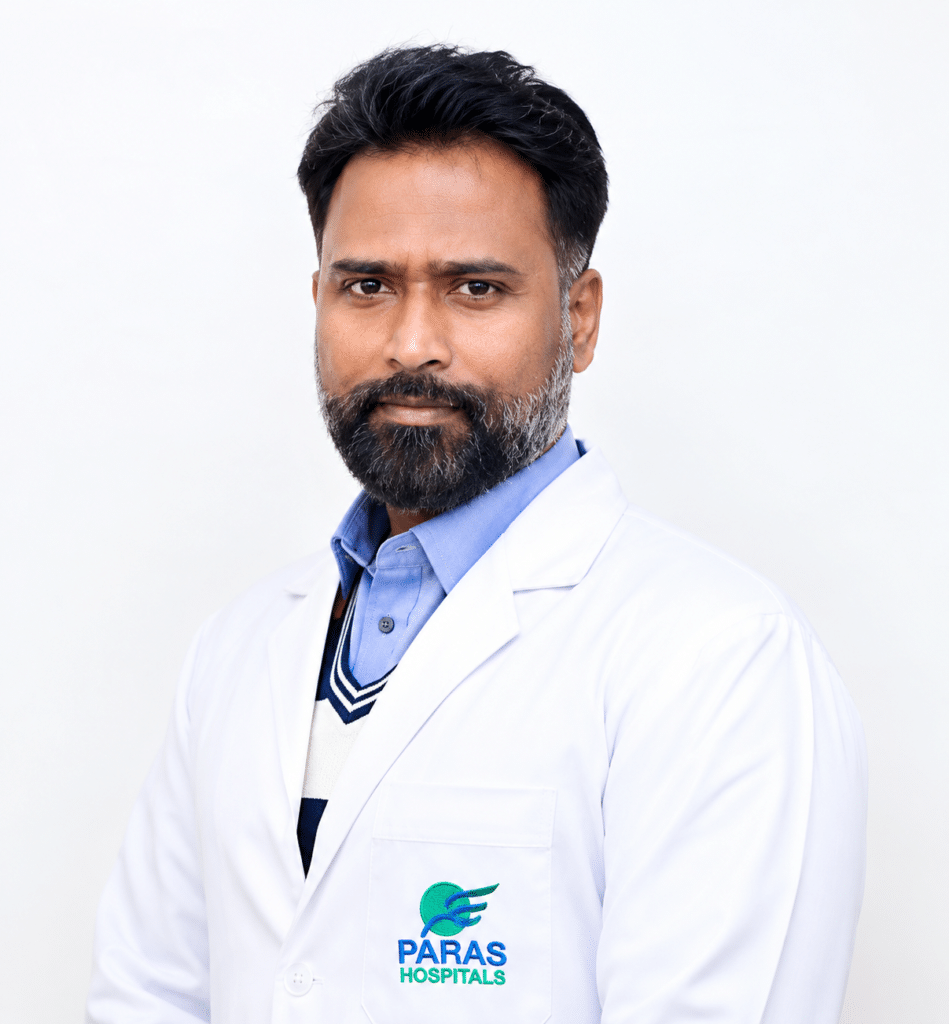
Meet Your Neurosurgeon: Dr. Harshad Patil
Dr. Harshad Patil completed MBBS at Terna Medical College, Navi Mumbai, followed by M.S. in General Surgery at Dr. Vasantrao Pawar Medical College, Nashik, and M.Ch in Neurosurgery at Sri Aurobindo Medical College and PG Institute, Indore. He then worked as a Registrar in Neurosurgery at Dr. R. N. Cooper Hospital, Mumbai, and as Assistant Professor at D.Y. Patil Medical College, Navi Mumbai, before settling in Bhopal.
His dissertation compared anti-edema drugs in patients with severe traumatic brain injury, and he has presented his work at state and national neurosurgery conferences. For patients searching for a Neurosurgeon in Bhopal, this mix of formal training, academic work and regular surgical practice is a source of reassurance. Families who want a Brain Surgery Specialist in Bhopal for a second opinion are also welcome to bring their scans and reports for review.
What Is Craniotomy Surgery in Bhopal? A Simple Explanation
A craniotomy is an operation in which a neurosurgeon temporarily removes a small section of the skull, called a bone flap, to reach the brain. The surgeon then treats the problem inside, such as removing a tumor or a blood clot, and fixes the bone flap back in place with small plates and screws at the end of the operation. The size and position of the opening depend on where the problem lies.
You may also hear the word craniectomy. In a craniectomy, the bone is not replaced immediately, which is sometimes needed when the brain is very swollen. Your surgeon will explain which procedure suits your condition.
When Is Craniotomy Surgery in Bhopal Recommended?
A craniotomy is advised when a problem inside the skull cannot be treated safely with medicines alone. Common reasons include:
- Brain tumors, both benign and malignant, to remove the tumor and obtain a tissue diagnosis
- Traumatic blood clots, such as extradural or subdural hematoma after a head injury
- Spontaneous brain haemorrhage that causes dangerous pressure
- Posterior fossa lesions that affect balance, coordination and brainstem function
- Brain abscess or infection that needs drainage
- Skull and diploic lesions, and certain vascular conditions, when surgery is the safest option
Symptoms that should make you seek urgent evaluation include persistent or worsening headache, repeated vomiting, seizures, weakness on one side of the body, difficulty speaking, blurred vision, confusion or drowsiness, especially after a head injury.
Brain Tumor Surgery in Bhopal Using Craniotomy
For most patients with a brain tumor, surgery is the first and most important step. Brain Tumor Surgery in Bhopal at our clinic begins with a detailed review of MRI and CT scans, so that the route to the tumor is planned to be as safe as possible. The goals are to relieve pressure on the brain, remove as much tumor as can be done safely, and send tissue for an exact diagnosis.
The type, grade and location of the tumor decide how much can be removed. For malignant tumors, surgery is usually followed by radiotherapy or chemotherapy with oncology specialists, and Dr. Patil helps coordinate this plan. The aim is always to protect speech, movement, vision and thinking as far as possible.
Craniotomy Operation in Bhopal: Step by Step
Understanding the steps often reduces anxiety. A typical operation follows this sequence:
- Pre-operative evaluation: Scans, blood tests, heart and anaesthesia checks, and a detailed discussion with the family.
- Anaesthesia and positioning: The patient is put to sleep and positioned carefully for the best access to the problem area.
- Opening the skull: A planned bone flap is made and the protective covering of the brain is opened.
- Microsurgical treatment: Using magnification and fine instruments, the surgeon removes the tumor, clot or abnormal tissue while protecting healthy brain.
- Closure: The bone flap is fixed back, the layers are closed and a dressing is applied.
- Monitoring: The patient is observed closely until fully awake and stable.
Tissue removed during the operation is sent for laboratory study, which helps decide whether any further treatment is needed.
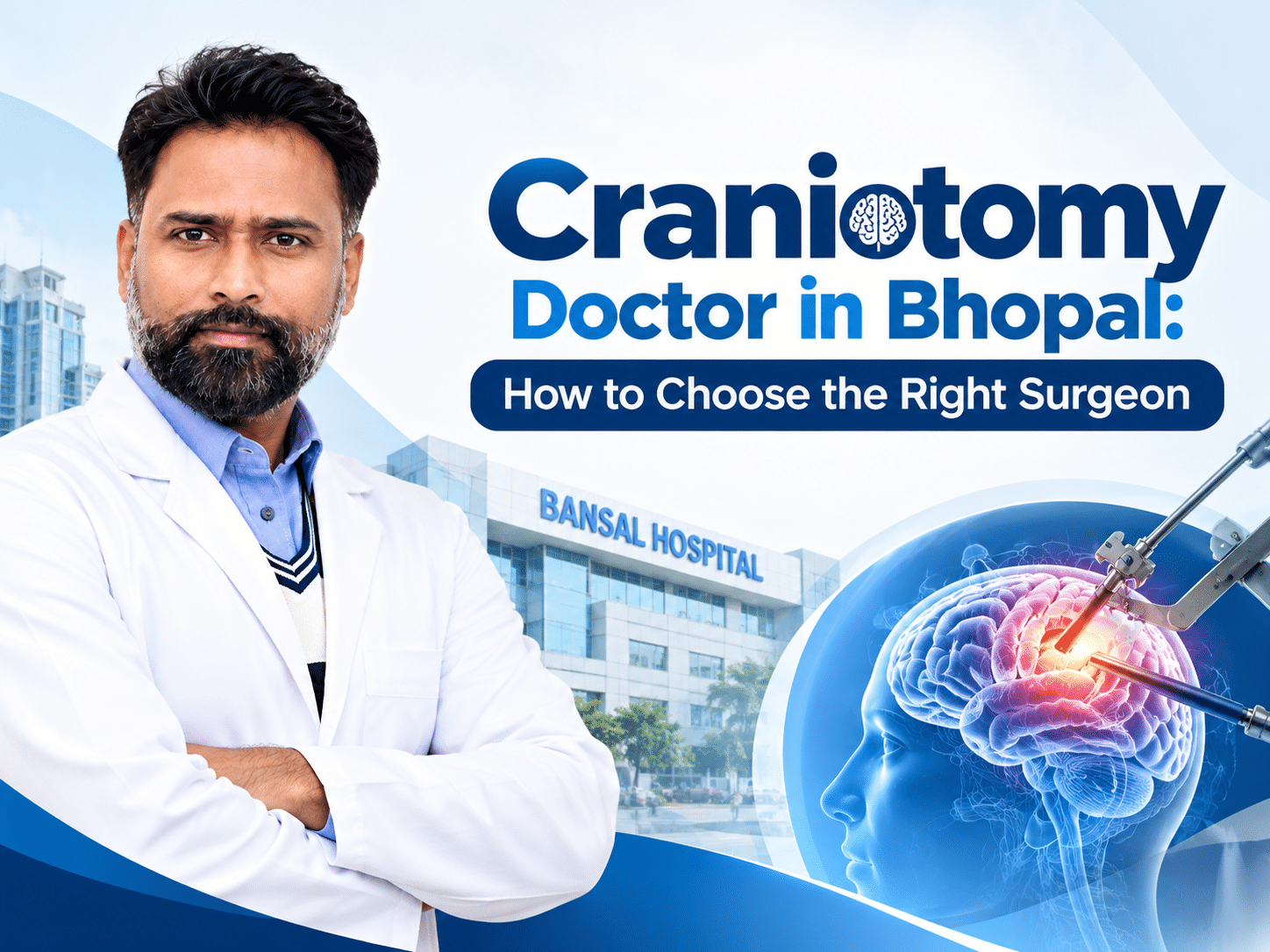
Understanding Risks and Safety
Every operation carries some risk, and brain surgery is no exception. Possible risks include bleeding, infection, swelling, seizures, temporary or permanent weakness, speech difficulty, and complications related to anaesthesia. The chance of these depends on your condition, the location of the problem and your overall health. We discuss your personal risk before surgery, along with what could happen if surgery is delayed or avoided, so that consent is truly informed.
Craniotomy Doctor in Bhopal: How to Choose the Right Surgeon
When you are comparing options, ask these questions:
- Is the surgeon a qualified neurosurgeon with M.Ch or DNB training?
- Does the surgeon examine your scans personally and explain the plan clearly?
- Are risks and alternatives discussed honestly, without false promises?
- Is the hospital equipped with intensive care, 24-hour monitoring and imaging?
- Will the same doctor guide you through follow-up?
A good surgeon will welcome your questions and a second opinion. That is the standard we try to keep in our clinic.
Your Journey With Us
- First consultation: We review symptoms, reports and scans, and answer your questions.
- Planning: Further tests are advised only when they will change the decision.
- Surgery: Our team explains each stage to the family, and our approach to Craniotomy Surgery in Bhopal is built on preparation and open communication.
- Hospital care: Close monitoring, pain control and early mobilisation.
- Follow-up: Wound checks, scans and rehabilitation planning.
Because the Craniotomy Operation in Bhopal is only one part of treatment, we stay involved until you are stable at home.
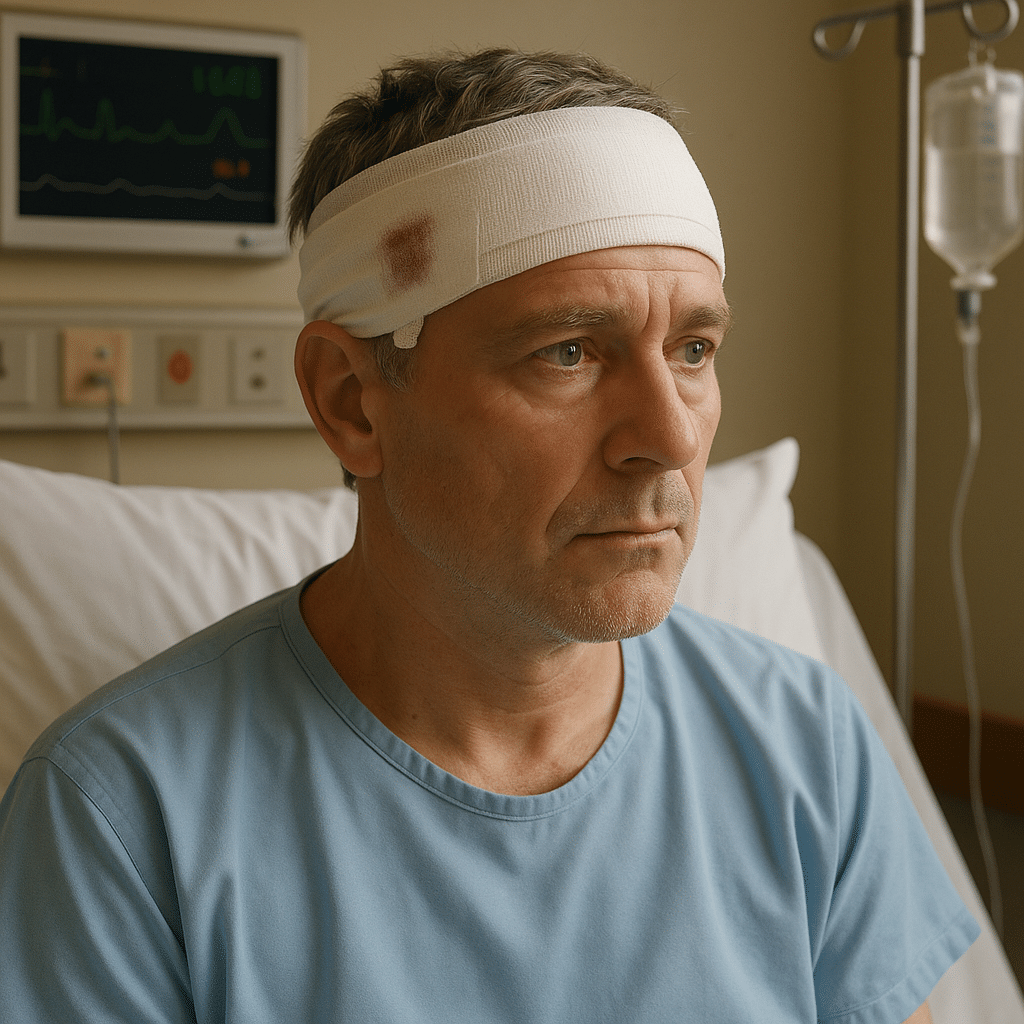
Recovery After Craniotomy Surgery in Bhopal
Recovery varies from person to person. Most patients stay in hospital for several days, and many are encouraged to sit and walk with support early. Full recovery can take weeks to months, depending on the condition treated and the patient’s age and health.
Helpful recovery tips:
- Take all medicines, especially anti-seizure medicines, exactly as prescribed
- Keep the wound clean and dry as advised
- Avoid heavy lifting and strenuous activity until your surgeon permits
- Eat a balanced diet and drink enough water
- Attend every follow-up visit and report new headache, fever, vomiting, weakness or fits immediately
- Use physiotherapy or speech therapy if recommended
Family support and patience matter as much as medicine during this period.
fAQ's
Frequently asked Questions❔
General information only. A consultation is needed for advice about an individual condition.
Brain surgery should be done only by a qualified neurosurgeon. Dr. Harshad Patil holds an M.Ch in Neurosurgery and has been practising in Bhopal since 2017. When choosing a neurosurgeon, look at qualifications, experience, communication and hospital facilities.
The cost of Craniotomy Surgery in Bhopal depends on the condition being treated, the complexity of the operation, implants used, length of stay, room type and any additional therapy. An accurate estimate is possible only after your scans are reviewed. Cashless insurance may be possible depending on your policy and the hospital, and our team can guide you.
Every brain operation has risks, but careful planning, microsurgical technique, experienced anaesthesia and close monitoring reduce them. A Craniotomy Operation in Bhopal is planned for each patient individually, and the risks are explained openly before you decide.
You can consult Dr. Harshad Patil, a Brain Surgery Specialist in Bhopal with M.Ch Neurosurgery training. Book an appointment, carry your scans and reports, and we will advise whether surgery is needed.
Choose a Craniotomy Doctor in Bhopal who has recognised neurosurgical training, examines your scans personally, explains risks honestly and has dependable hospital support for intensive care and follow-up.
Not always. Many brain tumors are removed through a craniotomy, but the approach depends on the tumor’s type and location. Some small or deep tumors may need other techniques. Brain Tumor Surgery in Bhopal is planned after reviewing your scans.
Most patients stay for several days. The exact duration depends on the condition, how quickly you recover and whether any complications occur.
Only a limited area of hair is usually removed, as needed for the incision. The scar is placed to be as discreet as possible, and hair commonly grows back over it.